Beginner guide: your first hour
The fastest way to lose an opening colony is to treat it like a city builder and spread out. Here is the order that works, and the traps that are specific to this game.
Last verified
· Game build 0.184.0.196275
Step 1 — feed them before anything else
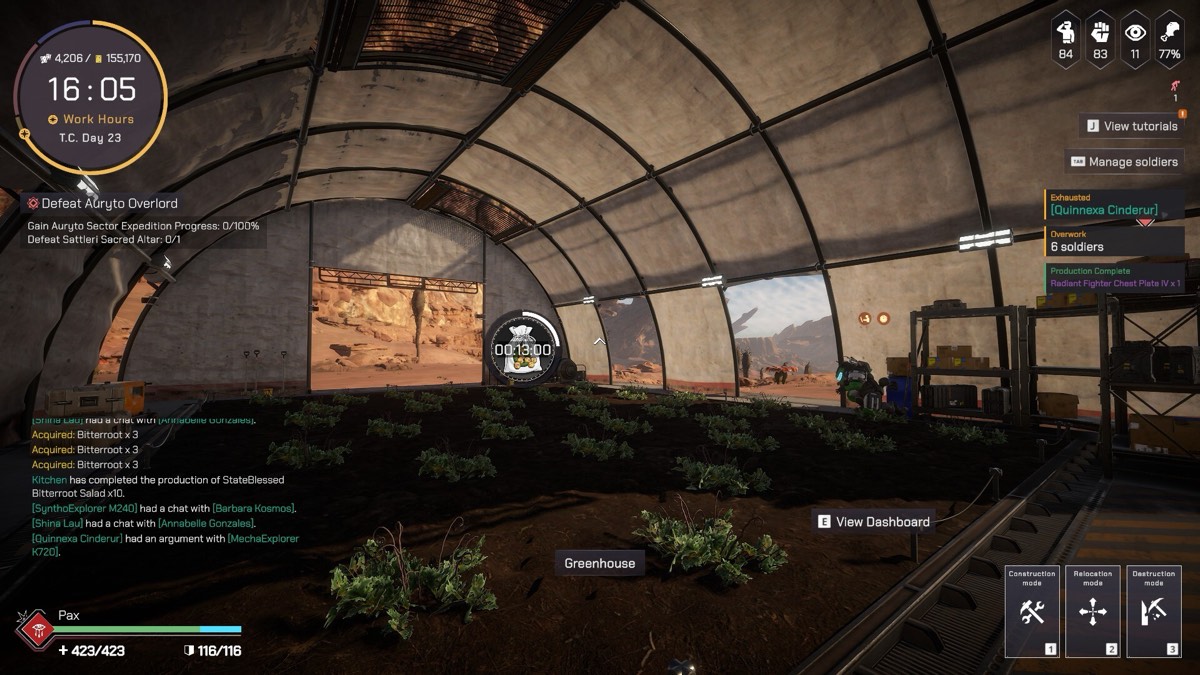
Your food chain has two halves and people only build the first one. The Greenhouse and Animal Farm produce
raw food. The Kitchen turns it into meals. The in-game alert is explicit about this: when
Low Food Reserves fires, the instruction is to replenish food reserves at the Kitchen.
So the opening build is a production pair, not a single building — and both need a body assigned to them.
Step 2 — assign by the number, not by the portrait
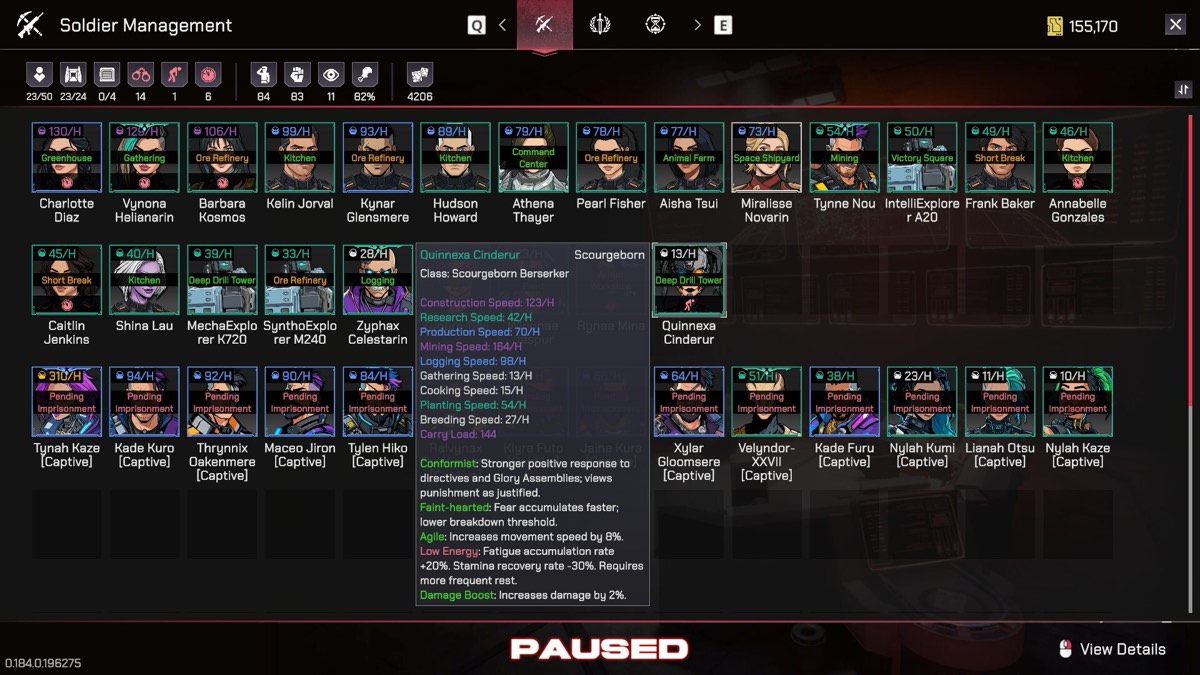
Open Soldier Management. Every citizen shows a per-hour figure for the job they are on, and their detail card breaks out every job they could do. The spread is not subtle — one screen shows citizens working at 130/H and 10/H side by side.
These are the stat lines you are sorting on:
| Stat | What it gates |
|---|---|
| Construction Speed | How fast they raise and repair structures. |
| Research Speed | Feeds the research-points-per-day pool. |
| Production Speed | Manufacturing throughput at workshops. |
| Mining Speed | Ore and Titanite extraction. |
| Logging Speed | Wood harvesting. |
| Gathering Speed | Surface resources and herbs. |
| Cooking Speed | Kitchen output — directly gates your food reserve. |
| Planting Speed | Greenhouse / farm work. |
| Breeding Speed | Animal Farm output. |
| Carry Load | How much a hauler moves per trip. |
Step 3 — the clock is a resource
| Phase | What it is for |
|---|---|
| Work Hours | Assigned jobs produce at their per-hour rates. |
| Social Hours | Citizens talk, argue, and try to learn skills from each other. |
| Rest Hours | Stamina recovers. Skipping rest is how Overwork and Exhausted alerts pile up. |
Skipping Rest Hours to squeeze out production is the most common self-inflicted wound. The game tracks it
and tells you: an Exhausted alert names the individual, an Overwork alert gives you
a headcount. Both are warnings before a productivity collapse, not after it.
Step 4 — your first expedition
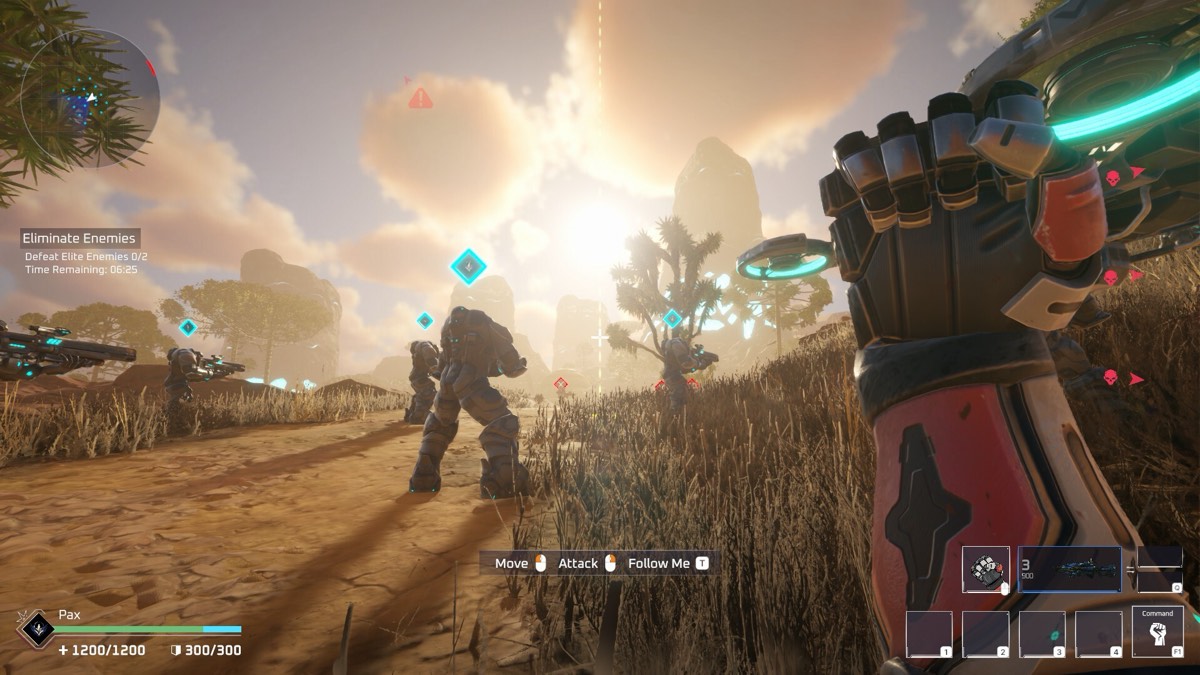
Do not go early and do not go big. Every citizen you take stops working at home for the entire duration. The specific disaster is taking your only cook, coming back with prisoners and loot, and finding the colony in a food crisis you caused by winning.
Before you launch, check three things:
- Is every production chain still staffed without the people you are taking?
- Do you have cells for prisoners? If not, capture nothing.
- Are you carrying something that can capture rather than kill? See the prisoner guide.
Five mistakes that end first colonies
- Killing what you could have captured. Explosives and heavy kinetic weapons are the fastest way to destroy your own labour supply. Damage is not the goal on a capture run.
- Leaving on a long expedition before you understand what dissent does while you are away. The colony keeps running. So does discontent.
- Doing everything at once. Every building has a construction workload and a material cost shown at placement. Starting five is slower than finishing two.
- Crushing the opposition completely. Suppression radicalises rather than removes. The loyalty guide covers the alternative.
- Assuming approval equals stability. A content population and a stable regime are not the same variable, and the game separates them.
Frequently asked
What should I build first in Pax Autocratica?
Food and the Kitchen that processes it. A Greenhouse with nobody cooking still triggers the Low Food Reserves alert, because the alert points at the Kitchen.
Why are my citizens so slow?
Because you probably assigned the wrong ones. Every citizen has a separate per-hour rate for each job. Gaps of 10× between two citizens on the same job are normal.
Should I take prisoners early?
Only as many as you have cells for. Captives sit in a Pending Imprisonment state when capacity runs out, and they are not working for you while they wait.
Is fear or kindness better early?
Both are supported. Fear is faster and cheaper up front but breaks Faint-hearted citizens sooner. Pick one and be consistent — flip-flopping gets you the downsides of both.
Read next
- Capturing & converting — The system this guide keeps pointing at
- Base layout — Before your footprint planning goes wrong
- Expeditions in depth — When to leave and when to come home